Thursday, November 27, 2008

Book Review: For the Sake of the Gospel

Des Ford is passionate about the gospel. So much so, that he has been prepared to sacrifice much for the sake of it. He has been vilified, defrocked, and now worships outside of Adventism — the denomination he loves and has tried to move forward in its thinking about a cherished doctrine that he believes obscures the gospel. Hundreds of others have also sacrificed jobs and friends for the sake of the gospel. Now, Des Ford, collaborating with his wife, Gillian, in their book For the Sake of the Gospel: Throw Out the Bathwater, but Keep the Baby tells the story of the theological controversy that decimated the Adventist denomination through the 70s and 80s and whose effects are still felt even to this day.

For Ford, the bathwater is the doctrine of the Investigative Judgment. The baby is the gospel of justification by grace alone through faith alone. In a series of somewhat disjointed chapters, Ford pleads for the Adventist officials to come clean and confess the wrongs perpetrated on the members. As far as Ford is concerned, almost no scholar in the denomination believes in the Investigative Judgment anymore and it is time to jettison it completely.

In the first chapter, Des provides the transcript of a talk he gave in 1997 at the Sydney Chapter of the Association of Adventist Forums entitled My Vision for the Seventh-day Adventist Church. His vision is

that the true church will arise and proclaim the true gospel to the whole world. It's an objective historical gospel, revealing the love of God in such a way as to break the hearts of rebels so that they might hate sin, learn the purity of Paradise, that sin is insanity, and that life commends what Christ commands. It's a church teaching these things that will lighten the world with the glory of the gospel, not one fixated by dates that don't compute. Seventh-day Adventism has an opportunity and a privilege to preach the Pauline gospel. (p. 7 - emphasis in original)

Moving on from this vision, Ford reviews 22 illicit assumptions that support the Investigative Judgment, the outdated year-day principle, the question of when forgiven sins are blotted out, the New Testament's view of the Day of Atonement, the real meaning of Revelation 14:6-7, the way the Investigative Judgment has been "reworked" since its establishment, a critique of the view that the United States appears in prophecy, and the real meaning of Daniel 8:14.

Ford then surveys the politics around the denomination's understanding of the gospel including the way men who disagree with the church's official positions abandon conscience and follow orders to not saying anything about their views and who have to suffer cognitive dissonance.

Gillian Ford provides an interesting history on How a Seventh-day Adventist Scholar in Biblical Eschatology Found His Denomination's Prophetic Traditions Wanting and his rediscovery of the apotelesmatic principle.

There are articles on the Glacier View trial of Des Ford (rather than the examination of Ford's views — what Glacier View was supposed to be about). Appendices include "positive" presentations on the Sabbath and the Covenants for which the Fords hold traditional Adventist positions.

The above is a partial list of themes covered — hopefully giving a sense of what the book contains. By their own admission, the

'... book has been negative for obvious reasons. One cannot vote for dangerous errors which threaten the joy and well-being of the children of God. Neutrality in a religious crisis is the worst form of cowardice. (p. 195)

As I have indicated above, For the Sake of the Gospel is somewhat disjointed. Des Ford's aphoristic style is not always easy to read. But the flaws in the writing are more than made up for the following:

  1. Des Ford has, obviously, been at the centre of the controversy surrounding the Investigative Judgment doctrine (although he is not the first). To hear from someone with firsthand knowledge and experience, including friendships with many of the key players in the history, provides an essential perspective.
  2. Ford's passion for the gospel consistently shines through. In the end, Ford is not primarily concerned with controversy. He wants to see the gospel as the primary focus of our attention. In his view, dealing with the Investigative Judgment is essential because it obscures the gospel and robs Adventists of their true freedom in Christ and their assurance of salvation.
  3. If it is by their fruits that we know the character of someone, then Ford is a genuine Christian man. The way he has consistently and graciously dealt with his adversaries and his refusal to engage in legal battles with his beloved denomination demonstrate the fruits of the Spirit in such a way that his credibility is enhanced.

For the Sake of the Gospel is an important book because it deals with important themes, written by an important "player", during an important part of Adventist history that we are still living. For the Sake of the Gospel, read this book.

Thursday, November 20, 2008

A Winner


How would you define a Christian “winner” in the game of life? Here are a few thoughts modified slightly from James and Jongward’s book, Born to Win.

A CHRISTIAN WHO IS A WINNER:
can reveal himself instead of projecting images that please, provoke, or entice others.

can admire and respect other people; he is not totally defined, demolished, bound, or awed by them.

does not play ‘helpless’ nor does she play the blaming game. Instead she assumes responsibility for her own life

responds appropriately to the situation. His response is appropriate when it is related to the message sent and preserves the significance, worth, well-being, and dignity of the people involved.

learns to know her feelings and her limitations and is not afraid of them. She is not stopped by her own contradictions and ambivalences. She knows when she is angry and can listen when others are angry with her. She can give and receive affection. She is able to love and be loved.

can be spontaneous. He does not have to respond in predetermined, rigid ways. He can change his plans when the situation calls for it.

can freely enjoy himself. He can also postpone enjoyment. He can discipline himself in the present to enhance his enjoyment in the future. He is not afraid to go after what he wants but does so in appropriate ways.

cares about the world and its peoples. She is not isolated from the general problems of society

can love a blogger.

Cartoon taken from the book Big Science, by Nick Downes
(click to enlarge)

Saturday, November 15, 2008

North American Adventism, by the numbers

by Tompaul Wheeler

I was momentarily tempted to post something about the latest Adventist News Network release about Adventist membership in North America topping a million, but then I realized that I was pretty sure we'd done that before, so maybe this was just a technical thing, and then I skimmed the actual article and the numbers just didn't seem to make sense. I moved on with my life, so I'm glad Alex Carpenter posted this:


Back in 2004 the Adventist Review News reported that:

'North American Division membership has passed the one million mark-1,001,872 as of October 21, 2004.'

Apparently the news is that we're continuing to top one million. Hmm? According to the most recent numbers helpfully available for us lay folk through the church's adventiststatistics.org, in 2006 the NAD recorded 1,041,715 members.

I applaud the focus on weeding out the excess on the books, but if, as the secretary states, the NAD grew at a 2% rate over the last five years (including losses) than we should be just hovering around 1,100,000. (The 2003 membership was 992,046.) Four years later, the news is that the NAD tops 1 million?

What's missing from the most recent Annual Council report in the Adventist Review is the actual 2007 number. Why?

Also not included in the report: the amount of money invested by the division, unions, conferences, local churches and individuals in public evangelism during 2007...

The slightly deflated numbers appear (based on what I've read elsewhere) to be related to a stronger emphasis on accurate, up-to-date bookkeeping, which is certainly laudable. Carpenter goes on to address church evangelism dollars which could appear to be invested more effectively.

The October 9, 2008 Adventist Review had a map of the U.S. and Canada, divided by regions, with Adventist to population ratios. One could assume that the Adventist church would do best in the South and Mid-America regions, but that's not at all the case. In those conservative regions, where religion is more closely tied to personal identity and people are set in their ways, the ratio is only 1:251 (hurray for all the old Adventists moving to Florida!) and 1:420, respectively. But up in the North Pacific region, by far the most secular part of America, the ratio is 1:143. (Even more secular Canada is 1:574, but that's for the entire country, where, as in Quebec, heritage and religion are tightly linked despite a general secularness (secularity?); Adventist statistics for the British Columbia conference are somewhat better than the nation as a whole.)

This reminds me of something I heard a church planting expert say several years ago (it was probably back at seminary): that church planting is most effective in the most secular areas. I think that rather than old-school evangelism, the North American church should focus on church planting and building fresh congregations, because, like it or not, the newer a church is, the easier it is for it to draw new members--and vice versa.

Sunday, November 09, 2008

The Freed Jesus

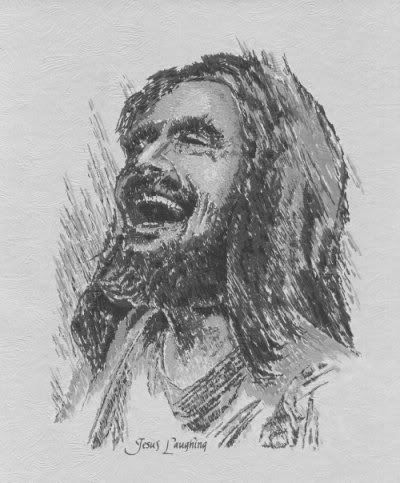
Which of the above depictions of Jesus do you think represents the authentic Jesus? Which one do you think is most consistent with the gospels of the New Testament? On what basis did you make your decision?

The quest for the authentic historical Jesus has been going on since the 18th century. The most (in)famous contemporary group that has engaged in this quest is the Jesus Seminar. The Seminar consists of more than 200 scholars who met regularly to discuss and determine what sayings of Jesus in the gospels were authentic and which represented the construction of the early church. They wanted to discern the historical Jesus from what came to be known as "the Jesus of faith". The scholars of the Jesus Seminar heard papers presented followed, at the end of the sessions, by an opportunity to vote on how authentic they believed certain sayings of Jesus are.

Last week, I had the opportunity to go and hear Dr Greg Jenks, a Fellow of the Jesus Seminar, speak on the topic Behind and Beyond the Jesus Seminar: What It Does and Why It Matters. It was a very enlightening evening and it was great to hear about the work of the Jesus Seminar from one who actually participates in it.

Like many Christians, I don't accept all the claims made by the Jesus Seminar. But I want to share with you one thing that Greg Jenks said as part of his presentation that made a big impact on me. He said that, as a result of modern Jesus scholarship, 'Jesus has escaped Christianity.' He drew on the metaphor of end-user agreements that are used with software. For Jesus, he said, there is 'no end-user agreement that limits Jesus to Christianity'. Jesus is not "owned" by any particular group of people. But often Christians have acted as though Christ belongs to them. And within the splintered denominations of Christianity different "Christ's" have been constructed as the only true Christ.

According to Jenkins, Jesus has broken out of the bounds of Christianity and is being adopted by other religious traditions — Islamic, Buddhist, and so on. All this begs the question: how much have we tried to put Jesus into boxes of our own making? Have we made Jesus in our image? Do we think that God can only bring Jesus to the world through us? And how will we respond to other faith traditions coopting Jesus?

Jesus reigns and he will not be confined. When he died, he died for the whole world (1 John 2:2). Is the Jesus we worship a Jesus who is for all people? Or do we expect others to conform to who we think Jesus is? Maybe we need to learn about Jesus afresh so that we can see him as he wants us to see him.

Technorati Tags: ,

Thursday, November 06, 2008

What are these bears going to do if the ice melts?


It is sad indeed when character assassination and “polar” thinking become part of the political process in a country in which we, the people, are the government. At times like these, the political debate should be well reasoned, thoughtful, and policy oriented. If we, the people, are influenced by these tactics, we do our country a disservice and diminish our moral influence in our individual families, churches, and communities.

Comic from Rubes, by Leigh Rubin.
(click for enlarged image)