Saturday, January 31, 2009

Are Adventists fundamentalists?

Milton Hook has written an interesting article on the relationship between fundamentalism and Adventism in the December 2008 edition of Good News for Adventists. You can read the article here. I'd be interested in your thoughts about it.

Friday, January 16, 2009

Doubt vs Certainty

Doubt and certainty. These two have been at war with each other as long as humans have been discussing religion and faith. Many Christians see doubt as the enemy of belief and faith and do everything they can to eradicate it. Someone once wrote that '[d]oubt digs the grave of faith.'  Frederick William Faber wrote: 'For right is right, since God is God,/ And right the day must win;/ To doubt would be disloyalty,/ To falter would be sin.'

Others see doubt as a necessary part of faith and growth in understanding. Robert Browning believed that the person '[w]ho knows most, doubts most.' And Rene Descarte, in his Principles of Philosophy argued that,

[i]f you would be a real seeker after truth, it is necessary that at least once in your life you doubt, as far as possible, all things.

At the very beginning of John Patrick Shanley's new movie, Doubt, Father Brendan Flynn (Philip Seymour Hoffman) preaches a sermon to his congregation where he asks the question: 'What do you do when you're not sure?'

There are two answers to this question: You could acknowledge doubt, exploring it as best you can, accept that there may be things we can never know, and live with the ambiguity that so often is a characteristic of human life. Or you could retreat into a dogmatic certainty, suppressing any doubts, and act forcefully to live as though your understanding is the absolute truth — sometimes wreaking great evil in the process. This choice between certainty and doubt is the theme of Doubt. And what a profound movie it is!

Father Flynn (Philip Seymour Hoffman) is the parish priest of St Nicholas Church School in the Bronx during the autumn (fall) of 1964 just after Vatican II which called for priests to see themselves as 'part of the family' of their parishioners.

The principal of the school, Sister Aloysius (Meryl Streep) is an old-school nun who commands the respect of her staff and students through fear. She is ruthless and rigid. Sister James (Amy Adams) is a new teacher at the school who wants to motivate her students by inspiring them to learn because it is exciting and liberating. Sister James is innocent and naive and struggles to adapt to the governance of Sister Aloysius and is often troubled by her approach to disciplining of the students.

One of the students is the school's first black student, Donald Muller (Joseph Foster). Sister Aloysius begins to suspect that Father Flynn is taking an inappropriate interest in Donald. Her response is swift and ruthless. Sister James is caught up in Sister Aloysius's campaign when she is recruited to keep an eye on Father Flynn and report any suspicious behaviour she might witness.

The problem with Sister Aloysius's conclusion is that the evidence is ambiguous. But that does not deter Sister Aloysius who is totally convinced of the guilt of Father Flynn. So the story becomes a battle between doubt and certainty as the fate of Father Flynn resides in the outcome.

Doubt is an absolutely brilliant film for a number of reasons. Firstly, Shanley, the writer and director,  has sustained ambiguity throughout the story forcing us, as viewers, to come to our own conclusions about what is happening. As the narrative progresses, we must consider new information and perspectives and grapple with doubt and certainty in our own thinking.

Secondly, Shanley has refused to collapse into a predictable Hollywood ending. Those who must always have a satisfying resolution to all their stories may (will?) be disappointed. This is cinema at its best — it treats us as intelligent. To watch this movie is to be forced to think for ourselves about the issues and consider our own relationship to doubt.

Thirdly, there are the actors. Meryl Streep is superb as Sister Aloysius. She inhabits her role to such an extent that we forget that it is Meryl Streep. And Philip Seymour Hoffman could not have been better in portraying Father Flynn. The occasions we see these two great actors on the screen together are tense and electrifying. And Amy Adams, Joseph Foster, and Viola Davis (who plays Donald Muller's mother) offer us subtle and powerful performances.

Doubt is the most thoughtful movie of the year so far. It's provocative portrayal of doubt and the potential evil of certainty is timely, penetrating, and deeply provocative. Doubt is a must-see movie — and I am completely certain about that!

Wednesday, January 14, 2009

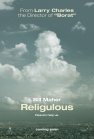
Movie Review: Religulous (2008)

The latest anti-religious documentary to hit cinema screens is Bill Maher's Religulous. The word "religulous" is a neologism (made-up word) that combines religion and ridiculous. That pretty much sums up what Bill Maher thinks of religion.

Religulous is ostensibly a documentary that surveys current religious beliefs and practices in the world today. Unfortunately, it's actually about how "smart" Bill Maher is at ridiculing and mocking religion using the worst possible cases of Christian, Islamic, and Jewish fundamentalism he can find. On the rare occasion it is slightly humorous and ironic (for example, the Muslim rapper who believes in freedom of speech and tolerance for himself but not for anyone who disagrees with Islamic beliefs). There are also the couple of absolutely delightful and intelligent Roman Catholic priests, one of whom is a scientist and the other a high official in Rome.

Bill Maher is a controversial comedian, actor, writer and producer who is most famous (apparently) for a US late night show called Politically Incorrect. You will note that theologian doesn't appear in this list of qualifications and Religulous proves that Maher knows nothing about religion than some sort of school yard version that is naive, primitive, and completely lacking in any nuance.

Perhaps one of the reasons for the obvious ignorance that Maher displays about religion is his clear lack of ability to listen. Sure, most of the people he "interviews" are complete nut cases or blind fanatics. In the entire 101 minutes, he only "interviews" two or three people that sound remotely intelligent or informed about their own beliefs. Even so, if you are going to interview someone, there should probably be more of the interviewee speaking than the interviewer. In Bill Maher's case, he clearly thinks he is smart and funny and condescendingly interrupts with mocking comments and questions that I think are supposed to impress the viewer.

By the end of Religulous, we come to realise that Bill Maher is as dogmatic and myopic as the people he has interviewed. The film ends with him ranting against religion with apocalyptic images flashing on the screen suggesting that the world will end because of religion.

In addition to the self-opinionated, self-congratulatory Maher, according to the Internet Movie Database, while the movie was being made it was called A Spiritual Journey so that interviews could be arranged with religious leaders without them knowing the type of "documentary" being made. Until Bill Maher arrived for the interviews, people did not know he was involved in the film. Clearly, Maher was setting his interviewees up so that he could control what happened and capitalise on their confusion to make them look stupid. So his whole approach is premised on deception from the beginning. That, along with a highly selected sample weighted toward the fanatic or self-deluded, results in a film that is not really of much value at all.

Please understand — I think religious fundamentalism is dangerous. But when Maher's Religulous is put alongside other productions like Andrew Denton's God On My Side, Religulous pales into complete insignificance. The alleged humour is not even funny. Even Richard Dawkins's Root of All Evil? which I heartily criticised is better than this! Even Michael Moore is better!!

Religulous is little more than a slightly amusing promotion of Bill Maher as he uses (often ill-informed, uneducated, dogmatic, fundamentalist) people to have us all look at him and think how clever he is. Don't watch it to learn anything. Actually, don't bother to even watch it for entertainment.

Note: The entire movie can be viewed online by clicking here.

Theological Games Aren't For Amateurs

The title, Games People Play, is stolen from a book by Eric Berne, MD. In it he offers the following definition of “game”. A game is a series of complementary transactions progressing to a well-defined, predictable outcome. Descriptively it is a recurring set of transactions, often repetitious, superficially plausible, with a concealed motivation; or, more colloquially, a series of moves with a snare, or “gimmick”…. Every “game” is basically dishonest, and the outcome has a dramatic, as distinct from merely exciting, quality.” In other words a "game" according to Berne, is a "con job".

The book lists the whole series of con jobs that people play: life games, marital games, party games, sexual games, under world games, and consulting room games. After reading this book I know for certain what I have suspected for most of my life: I'm not a good con man. My friends know that I am naïve, tend to accept at face value what people tell me, and I try to communicate what I think and feel in a straightforward way. One illustration of this personality characteristic follows.

I was 16, parked on the Hill overlooking the city of Glendale making out with my girlfriend, Nancy. When we came up for air after a long kiss, she asked me if I loved her. Needless to say I was torn. I wasn't sure where a "yes" would lead, and the prospect was both terrifying and exciting. Upon reflection, however, I told the truth. I said "no".

When I came to Chico State, I tried to play the “game” of university professor. I assumed that university classes should be hard and reasonably unpleasant if students were to learn what was required of them. I was unsympathetic when students complained about the length of my assignments and a specificity of the questions on my tests. Both my students and I were miserable, but I assumed that I would get used to our mutual discomfort so long as I achieved tenure. My con job ended when one of my best students told me to stop playing games and just be myself.

I have always loved participating and observing what Berne identifies as “pastimes”. Pastimes, by his definition are not “games”. They may involve contests, but not conflict. They have agreed-upon rules that willing participants or observers understand and agree to. Pastimes can and often are exciting with unpredictable outcomes, but winning is accomplished within an agreed-upon set of rules.

I can remember playing Rook on Saturday night with my parents and friends when I was so small that I had to go into the kitchen to arrange the cards in my hand. I played games of the monopoly that could last for days. I played Battleship with my friend Gary in a tent that could only be reached by negotiating a steep cliff. My friend Roland who lived across the street taught me to play poker. Ken taught me how to play Booray. I played computer games with Jim far into the night, and tested my friendship with family and friends playing Sorry.

Pastimes, according to Berne, require the participant to enter a kind of utopia where fairness is insisted upon and reasonable penalties are assessed for infractions of the rules.

Reason and experience inform us that anyone who believes that life is a “pastime” is a fool at best or a charlatan at worst. Why is it, then, that Christians have been taught that reason and commonsense cannot be trusted when it comes to religious belief? When bad things happen to good people, we are told “all things work together for good”. Tsunamis and hurricanes are sent by god to punish the wicked. Young people die in automobile accidents because God needs to shake up parents or church congregations into a spiritual revival. The death of a teenage son is fortuitous because, should he have lived, god knew that he would have engaged in behavior as an adult that would have jeopardized his salvation.

If Christians cannot rely upon experience and common sense to understand religion, they may decide that they are not intelligent enough or spiritual enough to understand how God operates in the world. They may conclude that to continue as Christians, they must trust people of superior intellect or mystical knowledge to guide their religious experience i.e. people or institutions that have authoritative explanations for everything that happens in the world. Many of these Christian believers fall prey to con artists—“game players”—who offer them “a recurring set of [religious] transactions, often repetitious, superficially plausible, with a concealed motivation; or, more colloquially, a series of moves with a snare, or ‘gimmick’. . . [that is] basically dishonest.”

Consequently, trust in religious authority is highly valued by many Christians. However, trust alone cannot be relied upon to support individual or institutional Christian ministries. Even in North Korea, a state controls virtually every channel of information from the outside world, trust must be accompanied by the brutal and pervasive punishment of critical thinking, as Kim Jon-il’s numerous prison camps attest. Consequently, religious con artists must engender fear, overt or hinted at. The pastor of a mega-church in Texas decided to tell his parishioners that he no longer believed in hell. That admission cost him his congregation.

It is easy for me to understand why mega-churches meet in huge athletic stadiums. The buildings themselves support the notion that what is happening is a “pastime” rather than a con game. Huge crowds can dispel critical thought and quiet the fear that always lurks when unreasoning faith is a motivating force: fifteen thousand Christians can’t be wrong.

It's really the same old story, isn't it? Job discovered much to his surprise and sorrow that life isn't a “pastime”. When he made that discovery, the four men who attempted to comfort him were no comfort at all.

Comic from Rubes, by Leigh Rubin.
(click for enlarged image)

Friday, January 09, 2009

The Adventist Way: Rape, Pillage and Plunder?

The Centre for Secular & Postmodern Studies -- the Adventist church's admirable attempt to identify with and minister to postmoderns, recently posted a message on their Facebook page calling for a list of words/slang/jargon/phrases that non-Christians find offensive when Christians use them.

One of the comments in their discussion board is from Nathan Brown, a contributing writer here. Nathan states:

Manny of our evangelistic words are problematic. Nicki has already mentioned "crusade," but even milder words such as evangelistic "campaign" and "winning" have that same militaristic vibe to it, that suggest rape, pillage and plunder.

Similarly, the use of sales/marketing language to talk about evangelism grossly misrepresents what we should be about.
Rape, pillage and plunder. Wow. I never thought of our evangelistic crusades that way before. With 2009 being the "Year of Evangelism" for the worldwide Adventist church, I wonder how Adventism's colossal bread-and-butter media campaigns across the globe foster the practice of "rape, pillage and plunder" that Nathan speaks of. Nathan also points the reader to a recent article in Christianity Today which states quite profoundly:
"The problem with implicitly salesy evangelism is bad theology, not bad technique, and it requires more than a simple change in method. If you feel like a used-car salesman talking about Jesus, the solution to the perceived lack of authenticity isn't a smoother pitch—it's a renewal of the church."
The debate of whether our evangelistic crusades are founded on bad theology (versus bad technique--which has been hammered to a pulp thanks to the "cLAim" crusade in Los Angeles) is worth more scrutiny. Steve Parker has already written about remnant theology (bad theology?) here that showcases the "spiritual arrogance" of our own worldchurch President, Jan Paulsen.

Getting back to CSPS' Facebook discussion board, other potentially "offensive" words/slang/jargon that non-Christians may have a problem with include:
- Christian
- Non-Christian
- Remnant
- Lost
- Born Again
- "Happy Sabbath!"
- Mission
- Unchurched
- Unbeliever

Got any to add to the list? Drop 'em by here.


Sunday, January 04, 2009

Adventists & Feast Keeping

I wasn't really aware of the strength of the trend towards the keeping of the Old Covenant feasts within Adventism until reading this article by Dale Ratzlaff and a Seventh-day Adventist minister (who obviously felt more comfortable maintaining anonymity!). I'd be interested in anyone's thoughts on this topic.